


In industrial systems using pressure vessels, the greatest risk does not necessarily come from rare incidents, but from equipment that is not designed and controlled according to a unified standard. When pressure, temperature, and operating conditions exceed safe limits, the consequences can be severe.
Beyond technical risks, this issue may also lead to a major commercial consequence: the equipment may not be internationally accepted. A design may perform well technically, but if it does not comply with globally recognized standards, it can still face rejection during inspection or may not be approved for operation. This is why standards such as ASME play not only a safety role, but also serve as a “technical passport” that enables equipment to meet international market requirements.
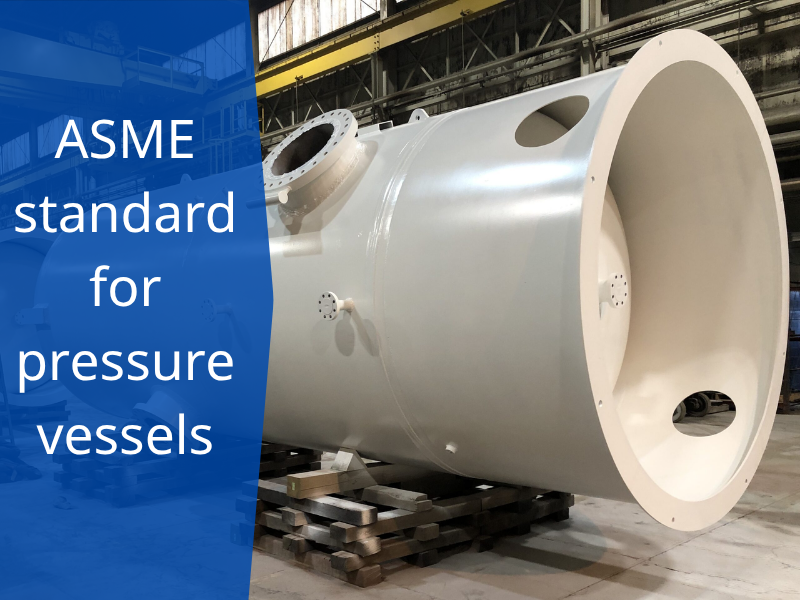
Globally, ASME is not the only organization developing technical standards; however, it is widely recognized as a leading authority in providing consensus standards related to mechanical engineering.
ASME stands for the American Society of Mechanical Engineers.
5,500 volunteers contributing to 500 standards adopted in over 100 countries
Founded in 1884, ASME has evolved into a trusted source of consensus standards in fields related to technology, science, and mechanical engineering practices. With contributions from more than 5,500 experts - including engineers, scientists, and government officials - ASME standards are developed to enhance public safety, health, and quality of life, while also promoting innovation, trade, and competitiveness.
Today, ASME’s portfolio includes more than 500 standards covering a wide range of areas, such as pressure technology, nuclear power plants, elevators/escalators, construction, engineering design, standardization, and performance testing.
Accepted in more than 100 countries, ASME standards serve as a “common language” for the mechanical engineering industry and as a “technical passport” for international industrial projects.
ASME Boiler and Pressure Vessel Code (BPVC)
Among the more than 500 standards developed by ASME, the Boiler and Pressure Vessel Code (BPVC) is the most important standard for pressure-containing equipment. In particular, ASME Section VIII specifies the requirements for the design, fabrication, testing, inspection, and certification of pressure vessels - forming the foundation for many industrial applications, including aviation fuel systems.
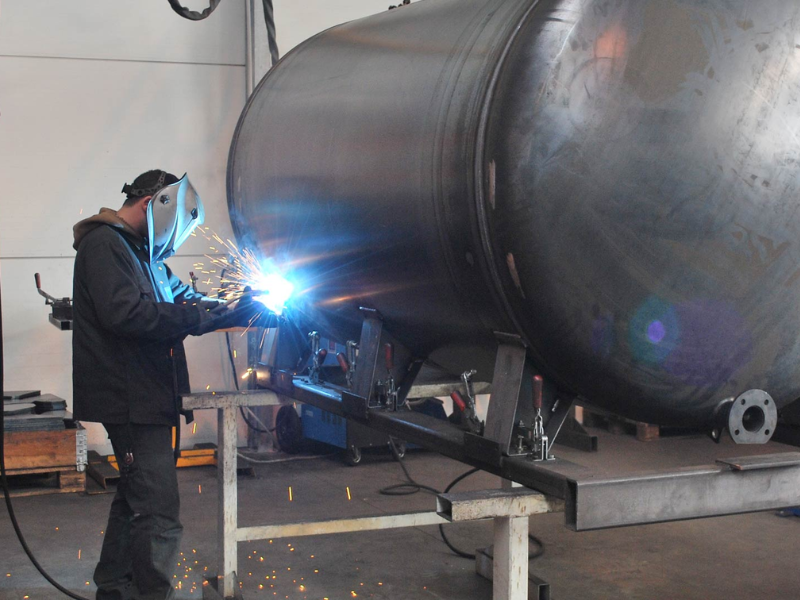
The welding process is carried out in accordance with ASME standards.
(Photo: Pasdelou)
Through ASME Conformity Assessment (CA) programs and certification processes, manufacturers can demonstrate that their products comply with stringent safety and quality requirements.
For this reason, in aviation fuel projects, selecting a manufacturer with ASME certification is not merely an advantage - it is a critical requirement to ensure that equipment is accepted and operated safely.
 FAUDI Aviation filter vessels comply with ASME standards.
In the next article, we will explore how ASME standards are applied in the design and manufacturing of aviation fuel filter vessels.


