


In aviation fuel systems, filter vessels are often viewed simply as filtration equipment. However, from an engineering perspective, a filter vessel is fundamentally a pressure vessel operating under continuous service conditions with extremely high safety requirements.
In practice, aviation fuel is transported at high flow rates and pressures through systems such as fuel depots, pipelines, hydrant systems, and fuel dispensers/refuellers. In addition, the fuel environment always carries potential explosion hazards (ATEX risks) if not properly controlled. Therefore, beyond filtration performance, the mechanical integrity and structural reliability of the equipment are critical requirements.
This is why the ASME Boiler and Pressure Vessel Code (BPVC), particularly ASME Section VIII, serves as a fundamental standard in the design and fabrication of filter vessels.
Key ASME requirements for pressure vessels
First, ASME specifies how to determine the design pressure and calculate vessel wall thickness to ensure that the equipment can withstand both operating pressure and abnormal conditions. This is especially important in fuel systems where flow rates and pressures can fluctuate significantly.
In addition, material selection must comply with stringent requirements. Materials such as carbon steel and stainless steel must meet standards for strength, corrosion resistance, and fuel compatibility. Incorrect material selection can directly affect the service life and operational safety of the system.
The welding process is another critical factor. ASME requires welding to be performed in accordance with qualified Welding Procedure Specifications (WPS), supported by Procedure Qualification Records (PQR), to ensure the integrity and strength of welds under high-pressure operating conditions.
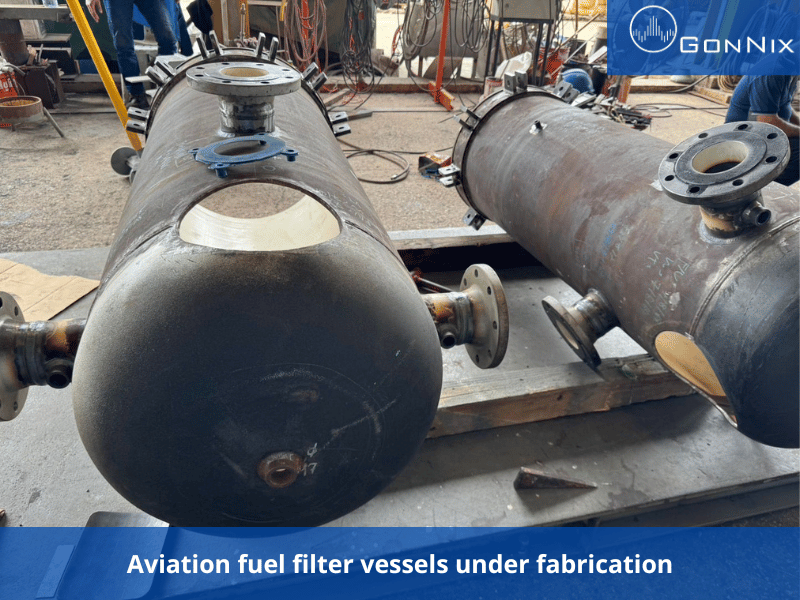
Furthermore, non-destructive testing (NDT) methods such as radiographic testing (RT), ultrasonic testing (UT), and hydrostatic testing are applied to detect defects and verify equipment tightness before commissioning. Finally, each compliant vessel is provided with an ASME nameplate and certification, ensuring full technical traceability.
In practical applications, these requirements apply to various types of filter vessels used in aviation fuel systems, including Filter Water Separators (in accordance with EI 1581) and micro filter vessels. Although their functions differ, all of them must comply with the same mechanical safety foundation.
It is clear that in aviation fuel systems, ASME standards are not merely design or manufacturing requirements - they are the foundation for ensuring the mechanical integrity and operational safety of filter vessels throughout their entire service life. A filtration device with excellent performance only becomes truly valuable when it is built upon a reliable mechanical structure.
However, not every piece of equipment described as “ASME compliant” is the same. The difference lies in how the standards are implemented in actual production - from material control and welding procedures to quality assurance systems.
👉 In the next article, we will explore how to evaluate an ASME-compliant filter vessel manufacturer and the key factors to consider when selecting a partner for aviation fuel projects.


